Self-Guided Nature Trail
Here you can see all the species and plant communities covered in the self-guided nature trail. Scanning the QR codes on campus will direct you to a description of the featured species.
Oaks & Pine |
Other trees |
Shrubs and other plants |
Moss and Lichens |
Habitat types |
Cedar Swamp |
||||
Hardwood swamp |
||||
Cladonia lichens |
Oak-upland |
|||
Greenshield lichen |
Oak-Pine Forest |
|||
Turkeybeard |
Feather moss |
Pine Forest |
||
Striped Wintergreen |
Windswept moss |
- |
||
Sensitive Fern |
- |
- |
||
Cinnamon Fern |
- |
- |
||
Blueberries |
- |
- |
||
Sweet pepperbush |
- |
- |
||
Sweetfern |
- |
- |
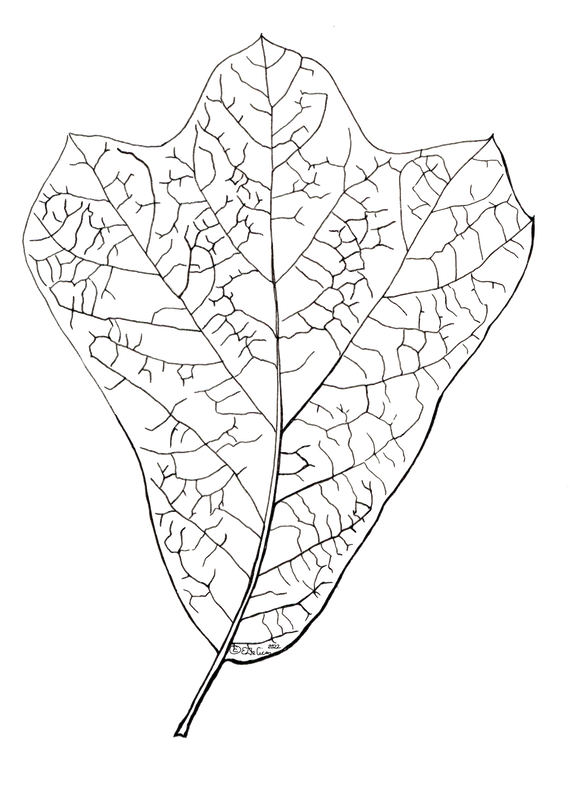
Blackjack oak. Quercus marilandica
|
Blackjack oak
Scientific name: Quercus marilandica Family: Fagaceae Blackjack oak is found in dry, sandy soils with pitch-pine. It is one of the smaller oak trees, but can use energy stored in its taproot to regenerate after a fire. This tree can be found mixed with pitch-pine in the Pine Plains of NJ. The leaves of Blackjack oak are thick and shiny. The acorns are tiny (~1/2") with parallel stripes. |
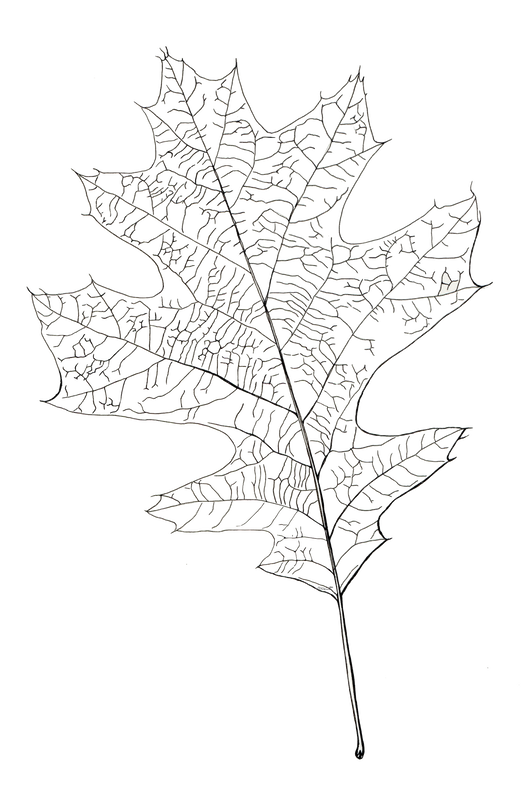
Black oak. Quercus velutina
|
Black oak
Scientific name: Quercus velutina Family: Fagaceae Black oak can be confused with Northern Red Oak, which does not grow in the pine barrens. Differences are subtle, but black oak has yellow inner bark, smaller acorns enclosed half way within the cap, and leaves with 5-7 lobes. Black oak is a member of the "red oak" group with bristle tips. The acorns from "Red oak" group trees are higher in tannins than "white oak" group trees, so they are often buried by squirrels. Buried acorns leach tannins, making them more palatable and less bitter. Tannins taste bitter and astringent. They were used historically for natural dyes and processing leather. |
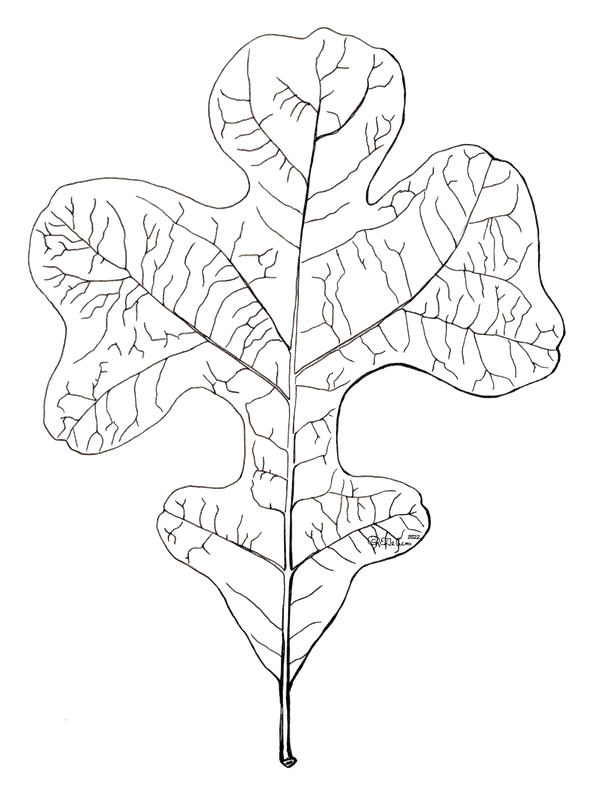
Post oak. Quercus stellata
|
Post Oak
Scientific name: Quercus stellata Family: Fagaceae Post oak is a member of the white oak group. The lobes are rounded. The top three lobes are larger and resemble a cross. The latin epithet "stellata" refers to stellate or star-shaped hairs on the underside of the leaf. The thick bark of this tree protects it from fire. |
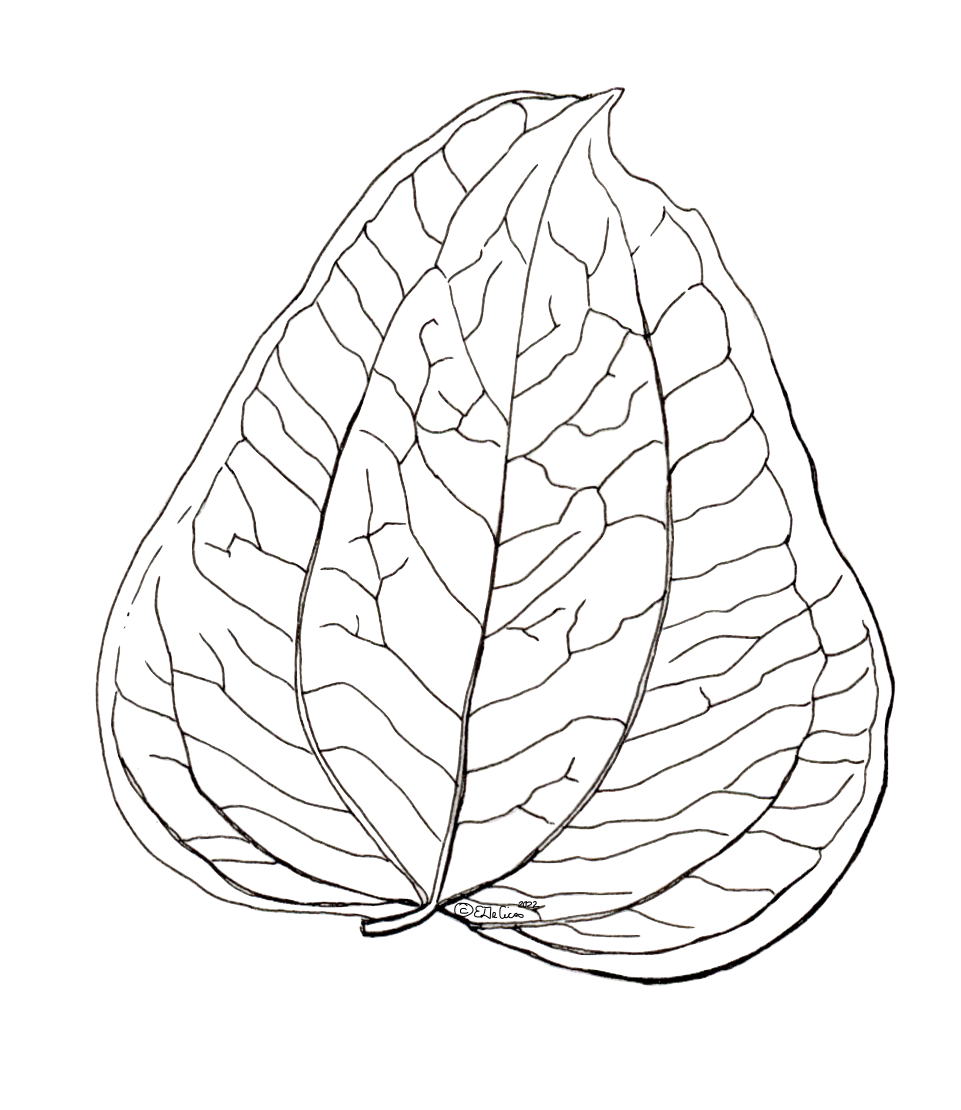
Greenbriar. Smilax rotundifolia
|
Common Greenbriar
Scientific name: Smilax rotundifolia Family: Smilacaceae Common greenbriar is one of several native briars in the pine barrens. It produces dark blue berries that persist through the winter and provide a food source for cardinals. In spring, they produce pale yellow flowers. Deer graze on the thorny stems, fresh stalks, and lemony leaves. Smilax develops rhizomes, enabling it to survive fires. Emerging leaves are considered edible and have a strong lemon scent and taste. |
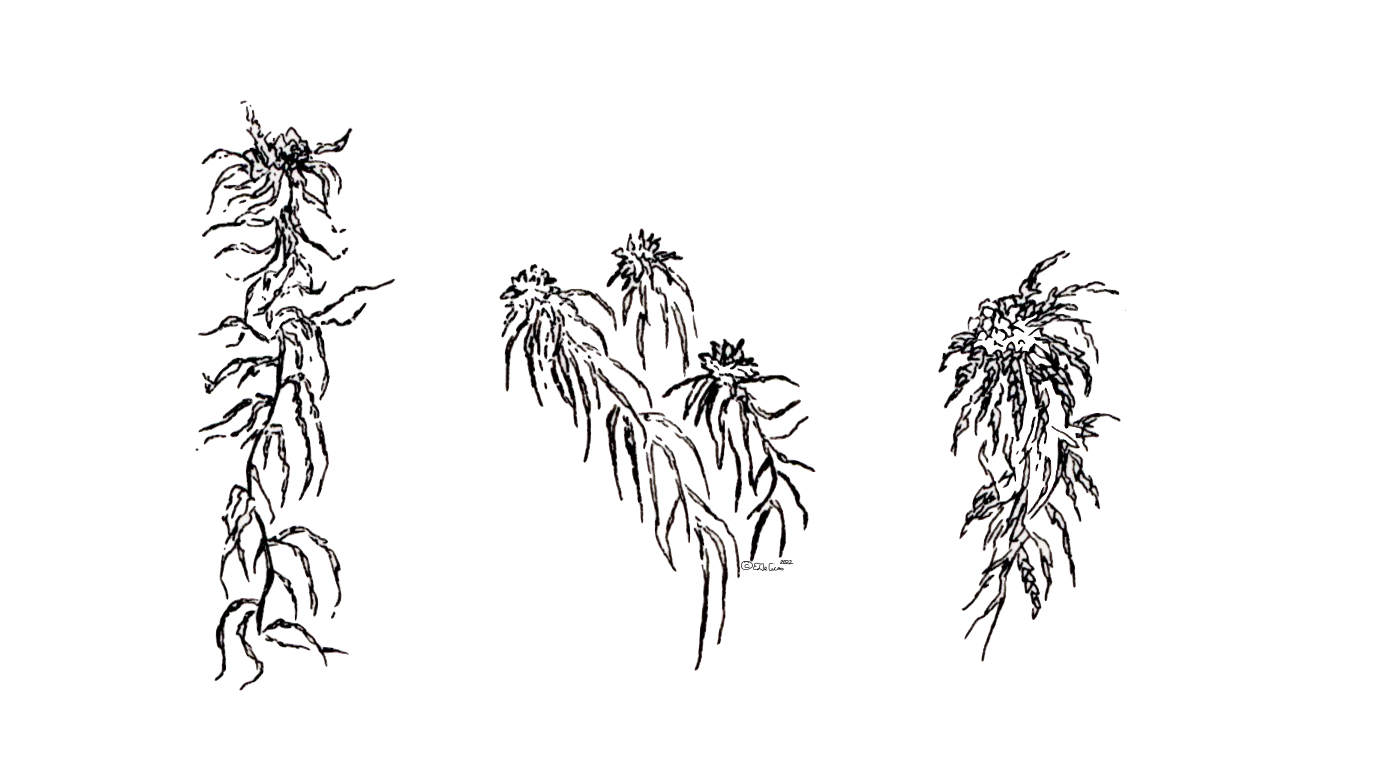
Sphagnum moss. Sphagnum spp.
|
Common name: Sphagnum moss
Scientific name: Sphagnum spp. Family: Sphagnaceae New Jersey has about 50 species of Sphagnum moss, half of which can be found in wetlands throughout the pine barrens. Sphagnum moss accumulates in swamps, bogs, and fens as peat which serves as a carbon sink. Some sphagnum species can hold 20x their dry weight in water. Each species has a very specific pH tolerance and microhabitat, whether that is high and dry on the top of a moss hummock or floating in open water. In the 1970s, there were concerns that leaded gasoline was leading to a decline in sphagnum moss populations. Sphagnum is sensitive to both pollution and pH. The Clean Air Act helped sphagnum rebound by banning leaded gasoline for cars in 1996. Sphagnum filters water, stores carbon, and gives wetland plants a place to grow. They are non-vascular plants, meaning they don't have vascular systems. Sphagnum reproduces with spores. In Autumn and Winter, some species produce red and orange pigments in response to the amount of sunlight. |
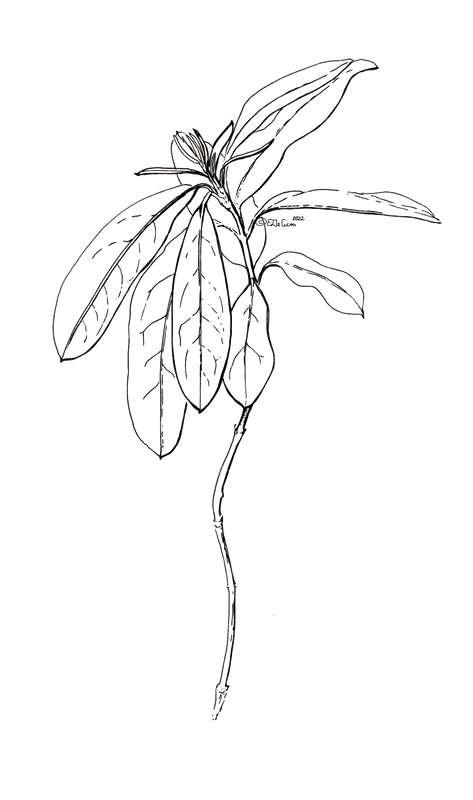
Kalmia angustifolia. Sheep laurel
|
Sheep laurel
Scientific name: Kalmia angustifolia Family: Ericaceae Sheep laurel produces tiny pink flowers, similar to Mountain laurel. Sometimes, they will flower twice over the length of the summer. The scientific epithet "angustifolia" refers to the narrow leaves. Sheep laurel prefers well-drained sandy soils. You might find this species in association with pitch pines or in transitional areas around swamps. The leaves are evergreen, making identification possible even in winter. The average height of this shrub is 3ft tall. |
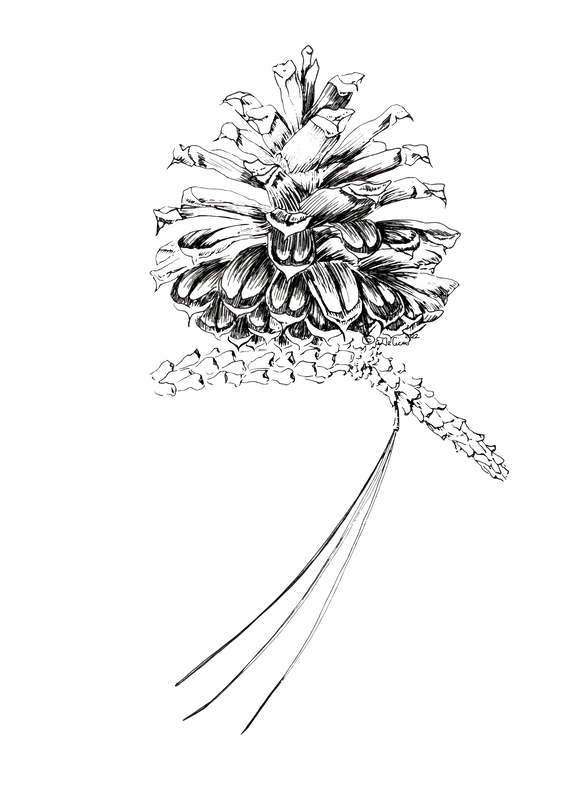
Pitch-pine. Pinus rigida.
|
Pitch-pine
Scientific name: Pinus rigida Family: Pinaceae Pitch-pine is the most abundant pine on campus. Needles are grouped in fascicles of three. The pinecones are larger than shortleaf pine. On some pitch-pine trees, you may notice clusters of needles around the trunk that aren't growing from branches. This is a fire adaptation called epicormic growth. Pine trees can lose entire limbs in storms and fires, but still be able to produce pine needles this way. The Pine Plains of New Jersey (the Warren Grove area) contain pitch-pines that are especially adapted to hot, frequent fires. They are shorter than other pitch-pines and focus their growth in establishing thick taproots and hundreds of cones. While many of the trees in this area are less than 10ft tall, their roots are 200 years old. Pitch-pine is typically found in dry, sandy, acidic soils but may also grow in wetter lowlands. Species of amanita fungi are ectomycorrhizal with pines. |
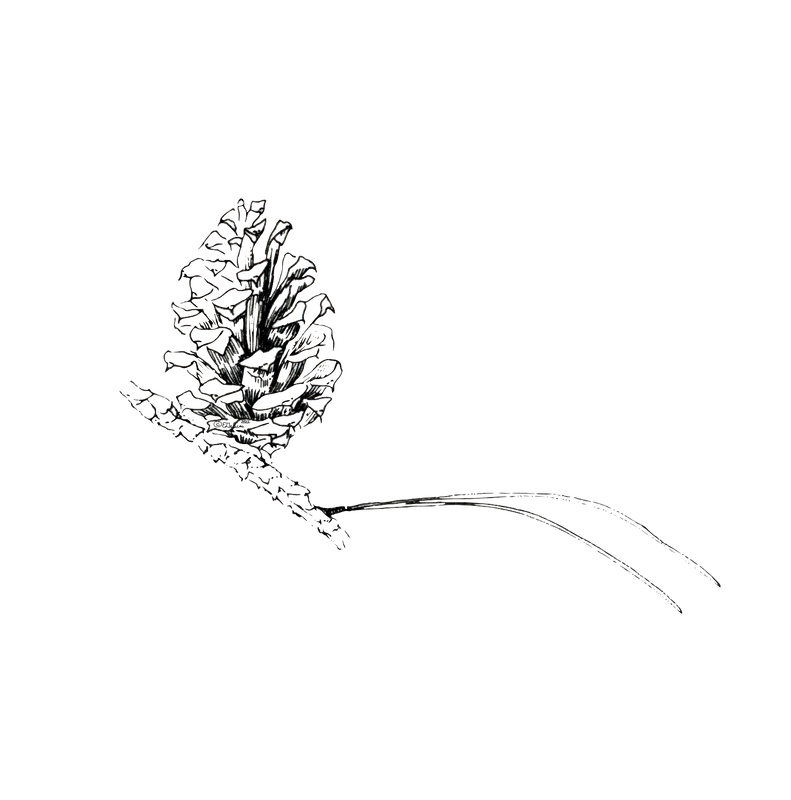
Shortleaf pine. Pinus echinata.
|
Shortleaf Pine
Scientific name: Pinus echinata Family: Pinaceae Shortleaf pine has needles in groups of two. Pinecones are less than 2" long. The bark is lighter than pitch-pine and often has tiny holes. |
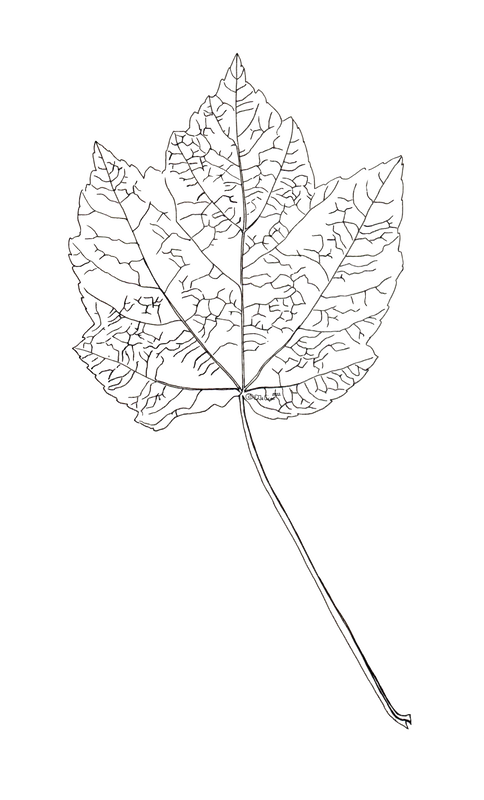
Red maple. Acer rubrum
|
Red Maple
Scientific name: Acer rubrum Family: Sapindaceae Red maple is a locally abundant tree that can grow in both wet and dry habitats. We use it here on campus to make maple syrup. Red maple produces bright red flowers in early spring. In winter, you can tell maples apart from most other hardwoods by looking for the opposite branching pattern in the twigs. Atlantic-white cedar swamps with a history of disturbance can convert to hardwood swamps with red maple. |
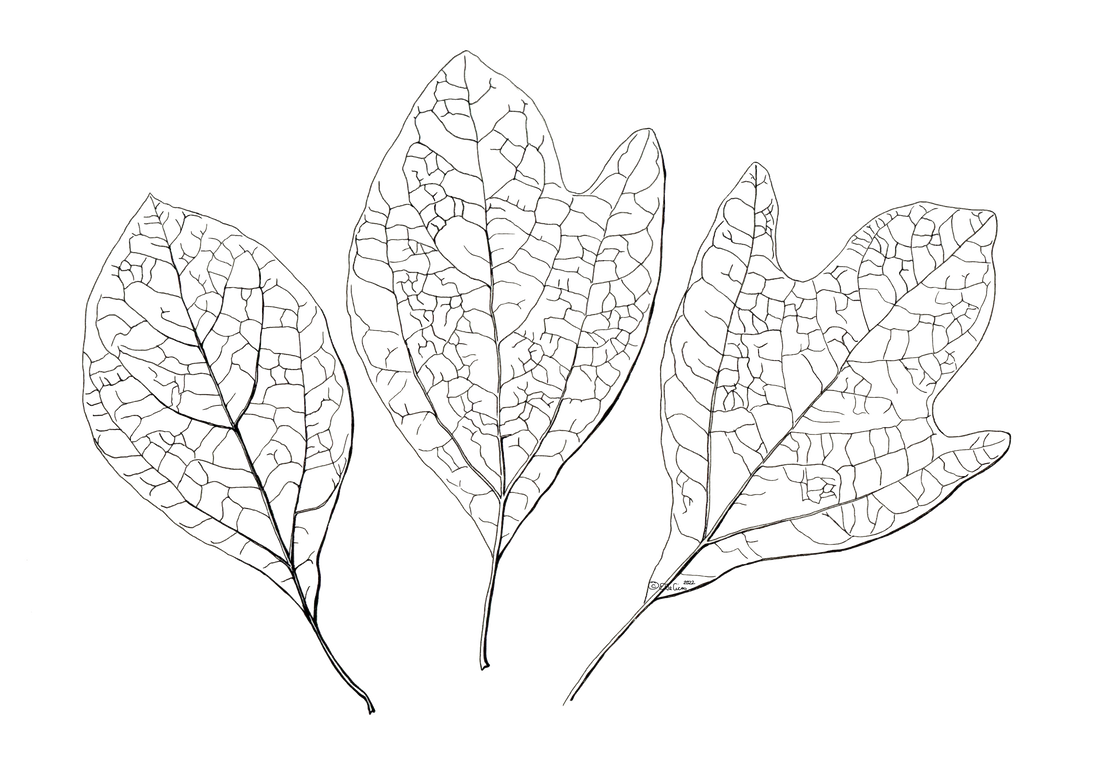
Sassafras. Sassafras albidum
|
Sassafras
Scientific name: Sassafras albidum Family: Lauraceae Sassafras is easily recognized by its leaves that have up to three lobes, but it can sometimes mutate and have more! As the tree matures, it starts to only produce simple leaves without lobes. The trees produce yellow flowers in spring. They are dioecious, meaning that there are separate male and female trees. The fruits will ripen on the female trees with contrasting blue drupes on red stalks. Sassafras oil, or safrole, was used to flavor root beer until it was banned by the FDA. |
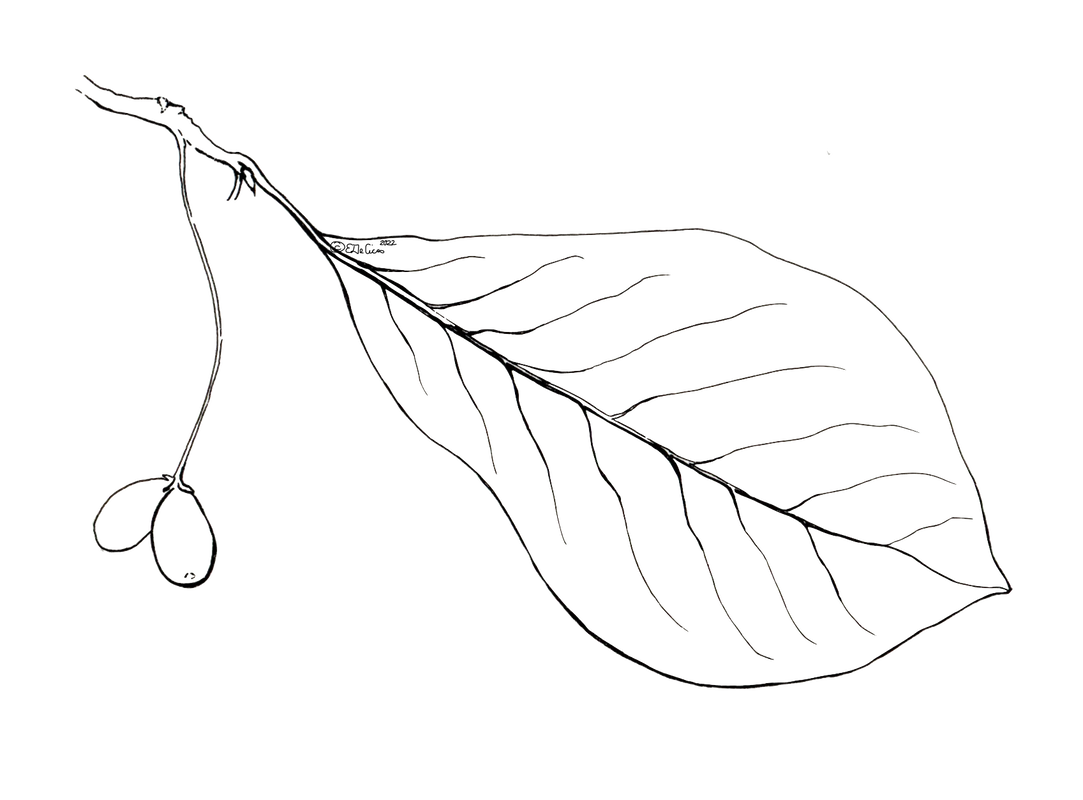
Blackgum. Nyssa sylvatica
|
Blackgum
Scientific name: Nyssa sylvatica Family: Nyssaceae Blackgum is commonly found in hardwood swamps with Red maple and Sweetgum. It tolerates very wet habitats and is the host of a rare parasitic species, dwarf-mistletoe. Dwarf-mistletoe is restricted to old-growth Blackgum trees. The leaves are simple and oval shaped, turning deep shades of red and orange in autumn. The blue-black fruits ripen as the leaves start to change. The twigs branch off perpendicular to the stem, creating a distinct pattern easy to recognize in winter. Blackgum (Nyssa sylvatica) and Swamp tupelo (Nyssa biflora) both occur in NJ. They are easily confused, but Swamp tupelo has flowers and fruits in pairs. |
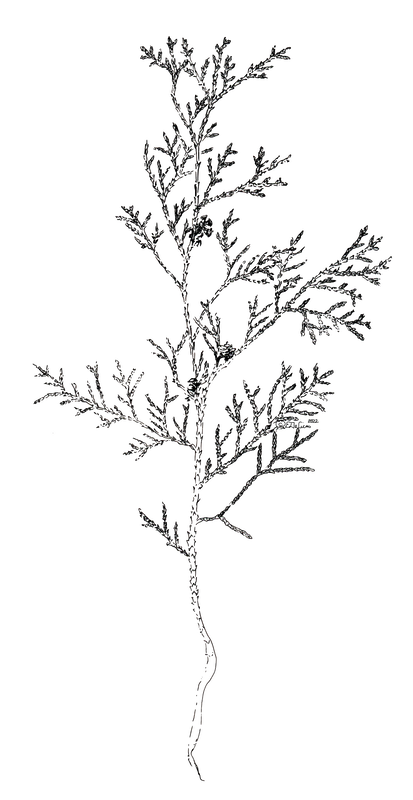
Atlantic White Cedar. Chamaecyparis thyoides
|
Atlantic White Cedar
Scientific name: Chamaecyparis thyoides Family: Cupressaceae Atlantic white cedar grows in swamps and fens. The trees have a finely ridged thin bark that usually twists in one direction. The bark may be covered in powdery lichens that are blue-green (Lepraria sp.) or yellow (Chrysothrix chamaecyparicola). |
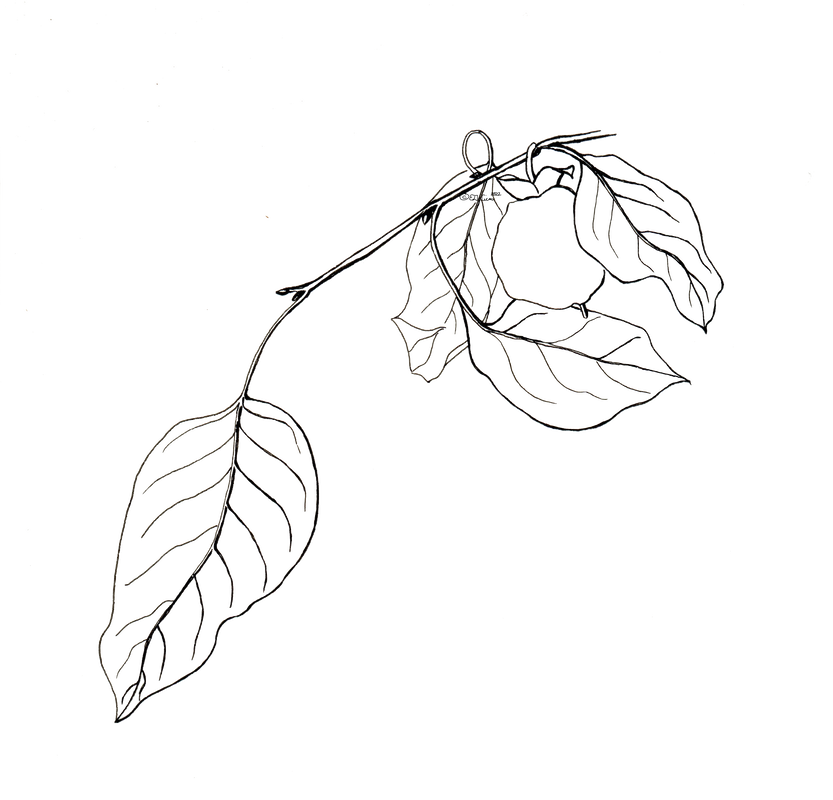
American persimmon. Diospyros virginiana.
|
American Persimmon
Scientific name: Diosypros virginiana Family: Ebenaceae American persimmon produces a 1" edible fruit. The fruit is orange in the fall, but does not ripen until after the first frost when the skin starts to turn black. Ripe fruits will taste sweet, but an unripened fruit will taste astringent. Each fruit contains several large seeds. The bark is blocky, similar to American dogwood. |
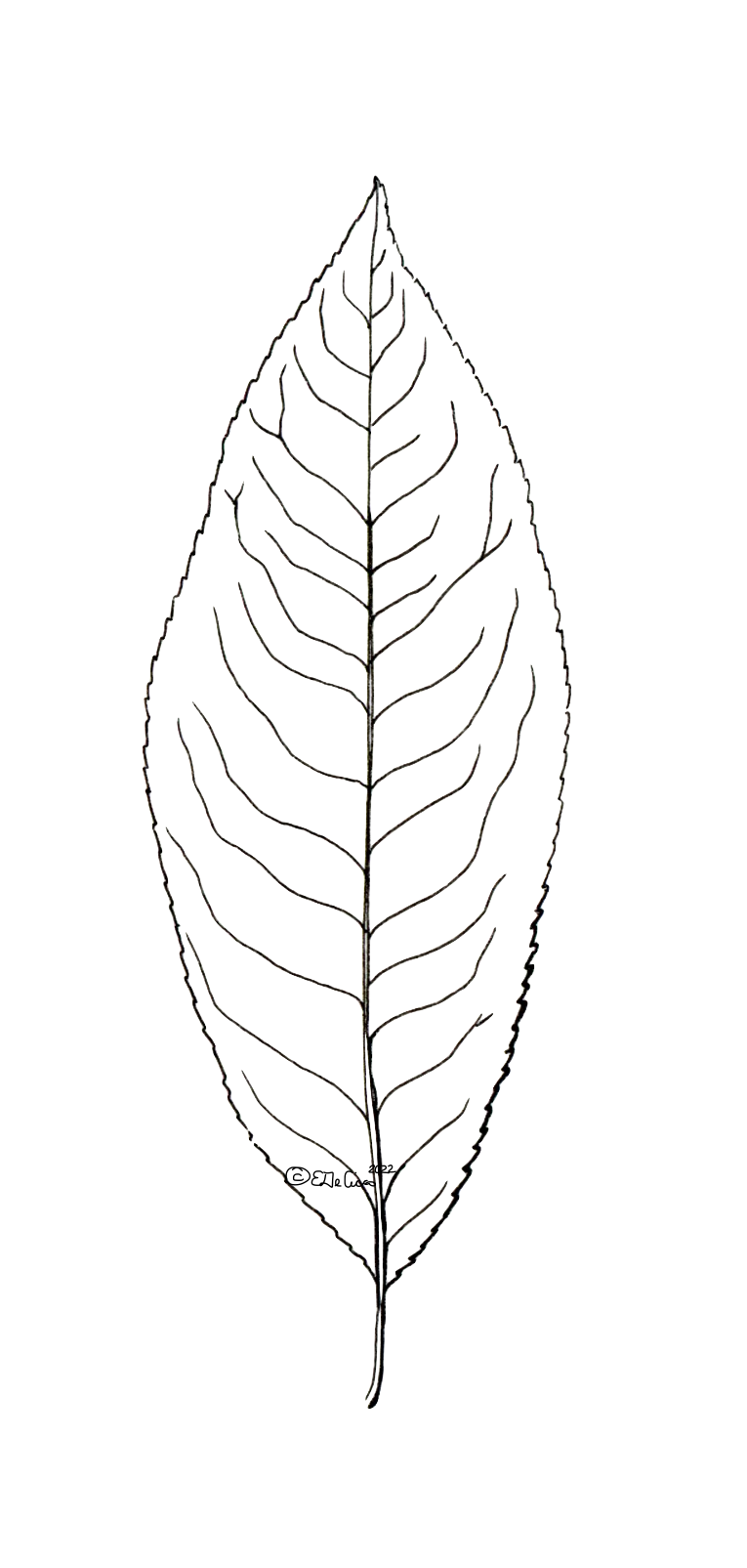
Black Cherry. Prunus serotina.
|
Black Cherry
Scientific name: Prunus serotina Family: Rosaceae Black cherry is often found on old farm and homestead sites as an early successional species. The bark is easy to identify in winter, with thick shiny graphite colored plates that curl as is they could peel off the trunk. Twigs usually have a strong chemical odor. Leaves are oval shaped (ovate) with serrate edges. Black cherry is prone to the black knot fungus, which can appear as galls on the twigs or tumor-like growths on the trunk. The trees are adapted to the fungus and can tolerate its growth. In the Coastal Plain and pine barrens, we have several other native species in the genus Prunus, including beach plums and Chickasaw plum. Black cherries and native plums are an abundant food source for birds. |
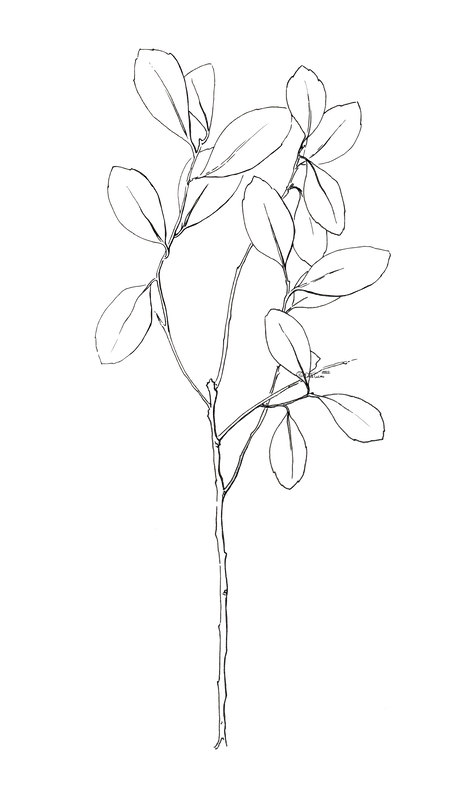
Inkberry. Ilex glabra.
|
Inkberry
Scientific name: Ilex glabra Family: Aquifoliaceae Inkberry is an evergreen shrub in the Holly family. The leaves are thick and shiny with a few tiny serrations at the top. The dark blue berries are not edible, but can be used to make a purple-blue ink. Inkberries can be either male or female. Both have pale yellow flowers, but only the female plants will have berries. Like American Holly, the berries mature in the fall and persist through winter. |
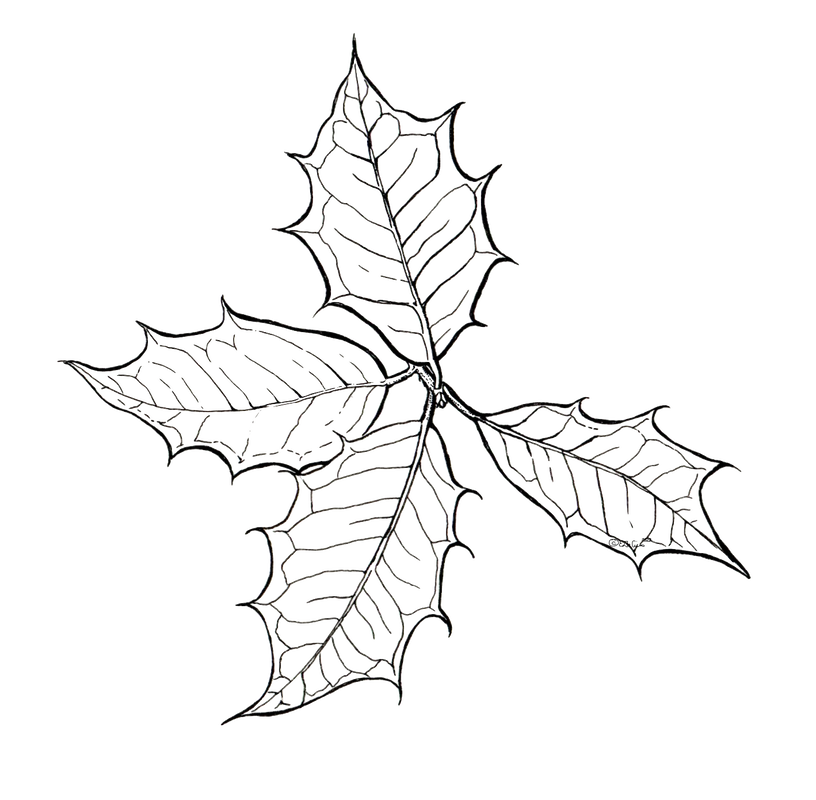
American Holly. Ilex opaca.
|
American Holly
Scientific name: Ilex opaca Family: Aquifoliaceae American Holly is most abundant in the Atlantic Coastal Plain, but it is also scattered throughout transitional areas in the pine barrens with mountain laurel. The bark of American Holly is often white-grey and nearly always covered in lichens. Script lichen, which looks like fine black scribbly text can often be found on the smooth bark. |
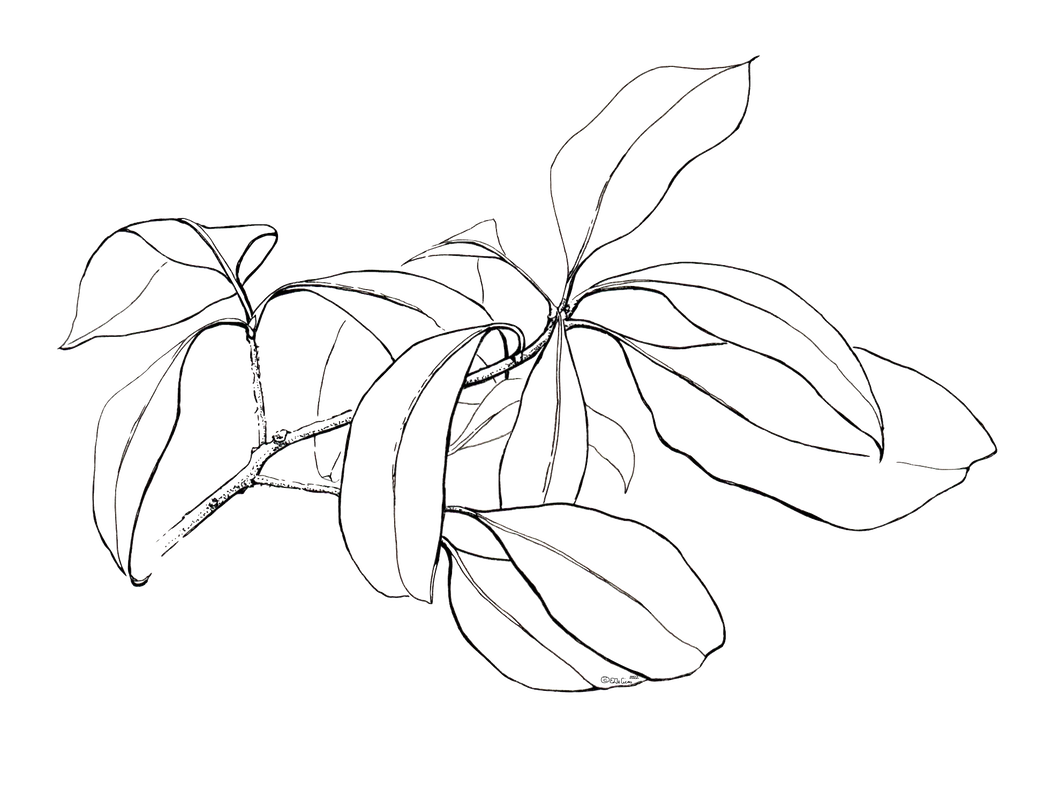
Mountain Laurel. Kalmia latifolia.
|
Mountain Laurel
Scientific name: Kalmia latifolia Family: Ericaceae Mountain Laurel has thick, shiny evergreen leaves. White and pale pink flowers blossom in the spring, with tiny red anthers that spring up when pollinators land on them. Two other closely related species of Kalmia in the pine barrens are Kalmia angustifolia and Kalmia buxifolia. K. angustifolia has smaller blue-green leaves and small pink flowers. K. buxifolia leaves are 1/2" long and the flowers are very tiny. |
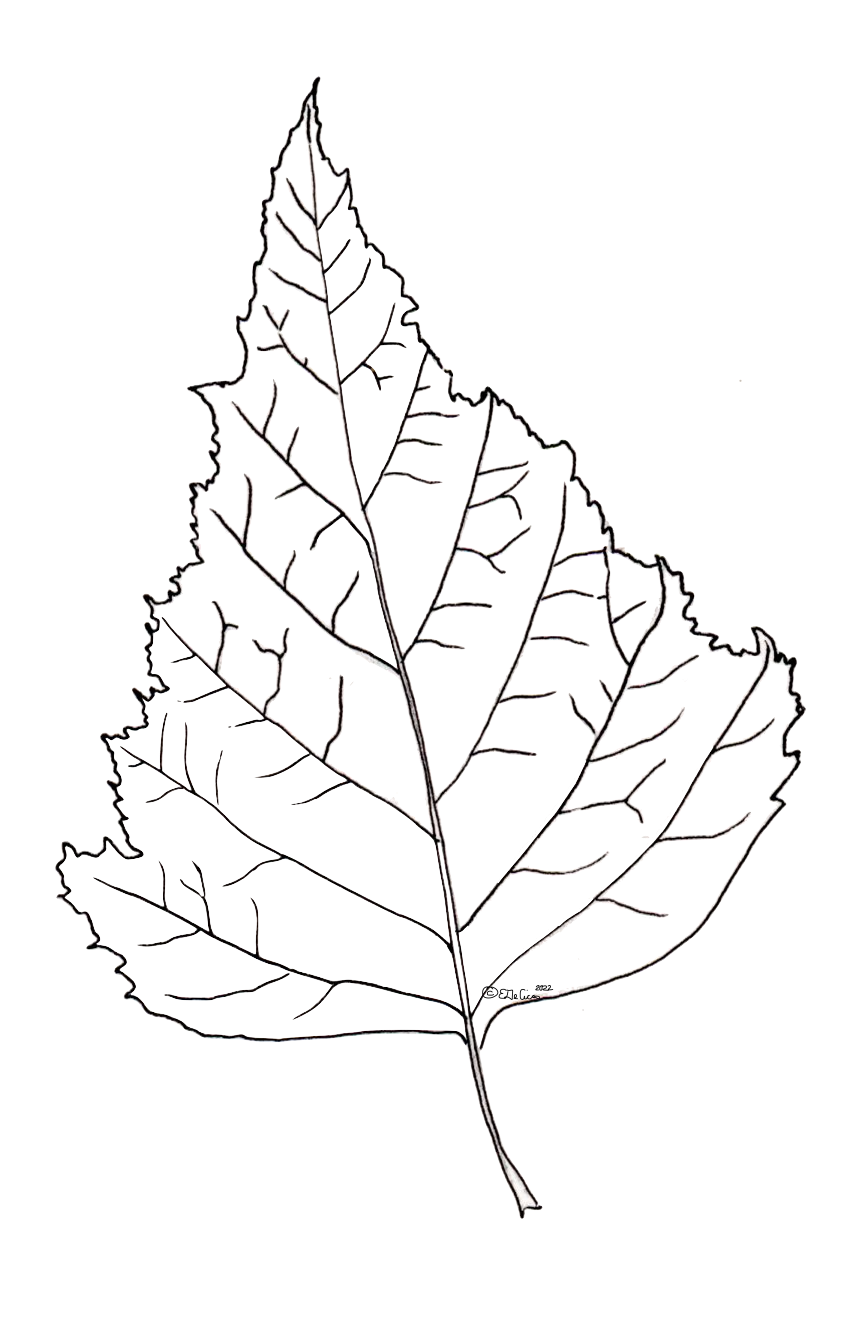
Grey birch. Betula populifolia
|
Grey BirchGrey birch
Scientific Name: Betula populifolia Family: Betulaceae Description: Grey birch is typically found around the margins of swamps. Some common associates include red maple and alder. Grey birch is the host of the birch polypore, Fomitopsis betulina, a light brown shelf fungus with a white underside. The birch polypore has been used historically as tinder, natural medicine, and material to produce paper. It is closely related to the fungus carried by Otzi-the-Iceman, the 5,000 year old mummy. |
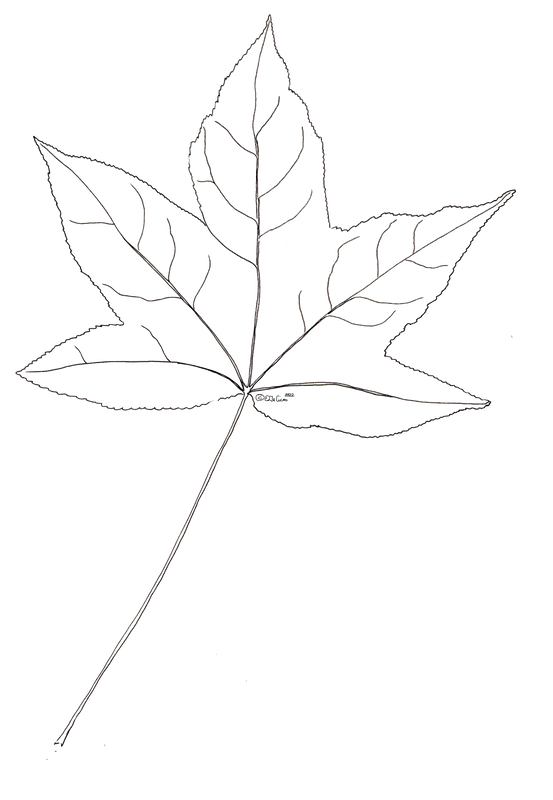
Sweetgum. Liquidambar styraciflua.
|
SweetgumCommon name: Sweetgum
Scientific Name: Liquidambar styraciflua Family: Altingiaceae Description: Sweetgum is a medium to large sized tree commonly found in lowlands with Red Maple. The twigs have unique, raised ridges or "wings." The fruit is a spiky ball, an aggregate of capsules with tiny winged seeds. Finches, squirrels, and chipmunks feed on the seeds. |
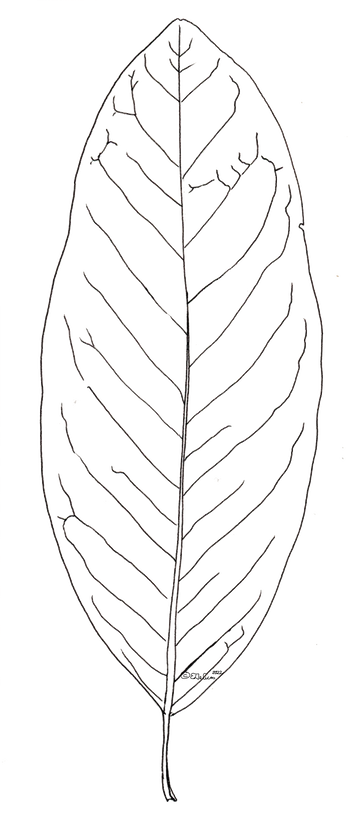
Sweetbay. Magnolia virginiana
|
Sweetbay MagnoliaSweetbay magnolia
Scientific name: Magnolia virginiana Family: Magnoliaceae Sweetbay is a native magnolia found in swampy areas and along rivers in the Atlantic Coastal Plain. It produces white flowers with a vanilla scent. The fruit is an aggregate follicle with reddish orange seeds. The leaves are dark green and shiny on the top and light green to white on the underside. If you look closely on the ground for seed pods in summer, you may find some with tiny white mushrooms in the genus Strobilurus. Pollinators include bees and beetles. |
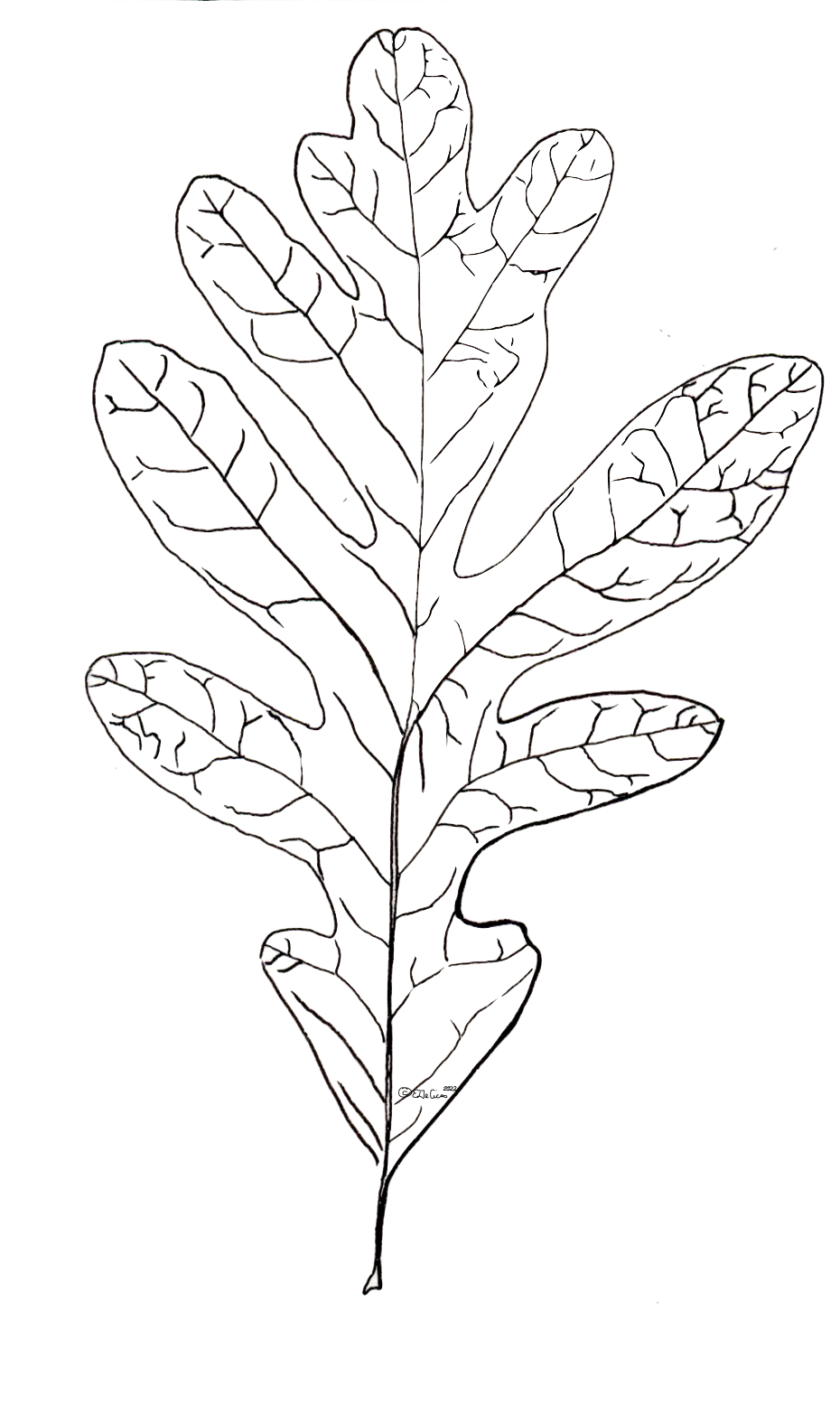
White Oak. Quercus alba
|
White oakWhite oak
Scientific name: Quercus alba Family: Fagaceae Members of the white oak group have rounded lobes. White oak acorns are lower in tannins than red oak acorns, making them the preferred choice of squirrels. Acorns tend to fall in mast years, meaning that large quantities are produced in certain years. White oak is an excellent host tree for moss. The flaky bark texture retains moisture better than other species, allowing moss and lichens to collect more water. A single white oak can host as many as 40 species of moss. |
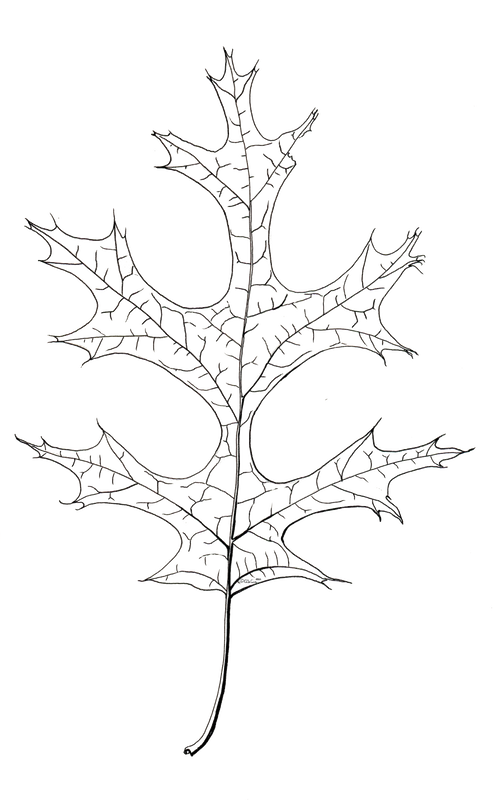
Scarlet oak. Quercus coccinea
|
Scarlet oakScarlet oak
Scientific name: Quercus coccinea Family: Fagaceae Scarlet oak is a member of the red oak family. The leaves are a deep red in autumn. The lobes have bristle tips and are cut much deeper (incised) than black oak. |
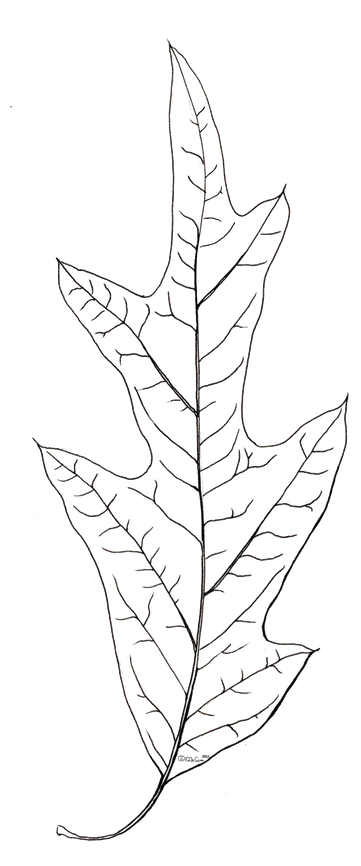
Southern Red Oak. Quercus falcata
|
Southern red oakSouthern red oak
Scientific name: Quercus falcata Family: Fagaceae Southern red oak has variable lobes, which can make each leaf look a little different from the next. They usually have three dominant lobes. The acorns are about 1/4" long and bright orange inside. |
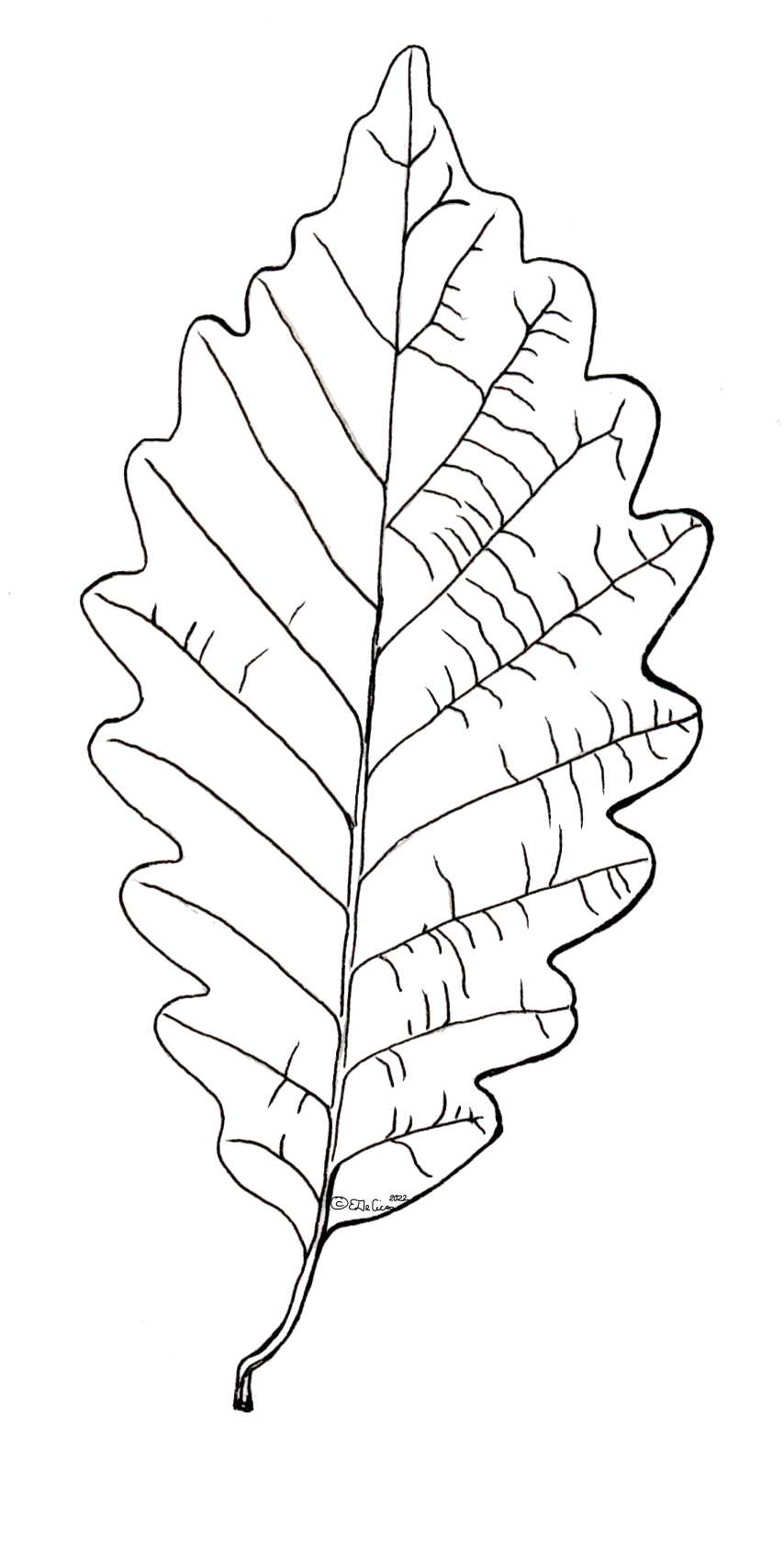
Chestnut Oak. Quercus montana
|
Chestnut oakChestnut Oak
Scientific name: Quercus montana Family: Fagaceae Chestnut oak has rounded lobes, typical of the white oak family. This tree is usually found in dry uplands with a variety of other oaks. The bark on mature trees is deeply ridged. |
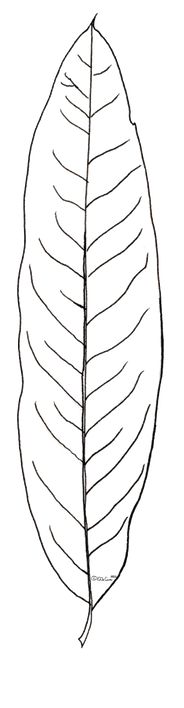
Willow Oak. Quercus phellos
|
Willow oakWillow oak
Scientific name: Quercus phellos Family: Fagaceae Willow oak has slender twigs, small oval leaves with a bristle-tip, and small acorns. It is a member of the red oak group, which always has bristle tips on the ends of the leaves. This tree can potentially be confused with Shingle oak, Quercus imbricaria. Shingle oak has slightly larger leaves and is a rare species in southern New Jersey. The bristle tip and smooth margins (sides of the leaves) distinguish willow oak from true willows. |
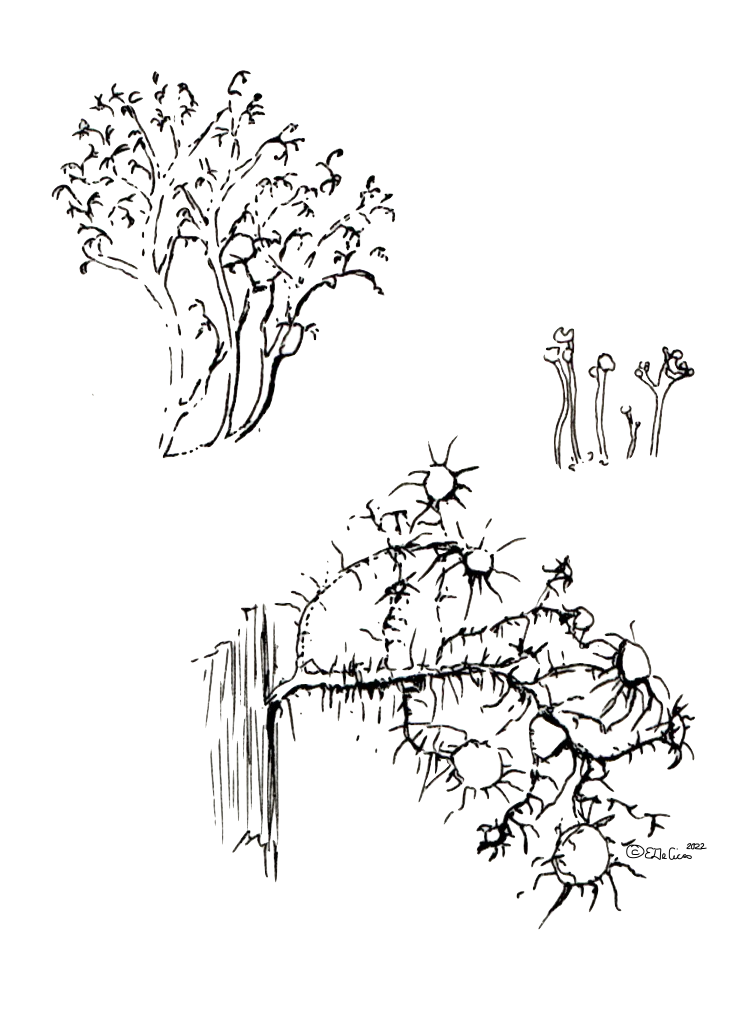
Clockwise from top: Reindeer lichen (Cladonia sp.) , British Soldier lichen (Cladonia macilenta), Old man's beard lichen (Usnea strigosa)
|
Lichen
Lichens are a symbiotic relationship between a fungus and an algal partner. The fungus provides structure (the "home") and the alga provides food. There are many species, but some of the most common ones you may encounter are green shield lichen and members of the Cladonia (reindeer lichen) family. Lichens collect water from the atmosphere and help clean our air. Some are very intolerant of pollution. It is always a good sign when you see a lot of lichens--that means the air is healthy and the land hasn't seen much disturbance. Lichens grow very slowly, usually only a few millimeters per year. A reindeer lichen the size of your fist could be 40 years old. Colors vary from bright to dull greens, grey, yellow-green, blue-green, and orange. Fruiticose tend to grow in damper habitats where they can collect more moisture. Crustose tend to grow on bark, soil, and rocks and only have one side with the alga exposed. |
