Stockton University Nature Trail
  • Home
  • Trail Maps
  • Biodiversity Survey
  • Self-Guided Nature Trail
    • Oaks & Pines >
      • Black Oak
      • Blackjack oak
      • Chestnut oak
      • Post oak
      • Scarlet oak
      • Southern red oak
      • Willow Oak
      • White oak
      • Pitch-pine
      • Shortleaf Pine
    • Shrubs & Lianas >
      • Greenbriar
      • Inkberry
      • Mountain laurel
      • Sheep laurel
    • Trees and Shrubs >
      • American Holly
      • Atlantic White Cedar
      • Black cherry
      • Blackgum
      • Eastern Redcedar
      • Grey birch
      • Persimmon
      • Red Maple
      • Sassafras
      • Sweetbay magnolia
      • Sweetgum
    • Moss and Lichens >
      • Lichens
      • Sphagnum moss
  • Blog
  • Contact
  • Home
  • Trail Maps
  • Biodiversity Survey
  • Self-Guided Nature Trail
    • Oaks & Pines >
      • Black Oak
      • Blackjack oak
      • Chestnut oak
      • Post oak
      • Scarlet oak
      • Southern red oak
      • Willow Oak
      • White oak
      • Pitch-pine
      • Shortleaf Pine
    • Shrubs & Lianas >
      • Greenbriar
      • Inkberry
      • Mountain laurel
      • Sheep laurel
    • Trees and Shrubs >
      • American Holly
      • Atlantic White Cedar
      • Black cherry
      • Blackgum
      • Eastern Redcedar
      • Grey birch
      • Persimmon
      • Red Maple
      • Sassafras
      • Sweetbay magnolia
      • Sweetgum
    • Moss and Lichens >
      • Lichens
      • Sphagnum moss
  • Blog
  • Contact
Search by typing & pressing enter

YOUR CART

Blackgum
​Nyssa sylvatica

Blackgum

Picture
Blackgum
​Scientific name: Nyssa sylvatica
Family: Nyssaceae

Blackgum is commonly found in hardwood swamps with Red maple and Sweetgum. It tolerates very wet habitats and is the host of a rare parasitic species, dwarf-mistletoe. Dwarf-mistletoe is restricted to old-growth Blackgum trees. 

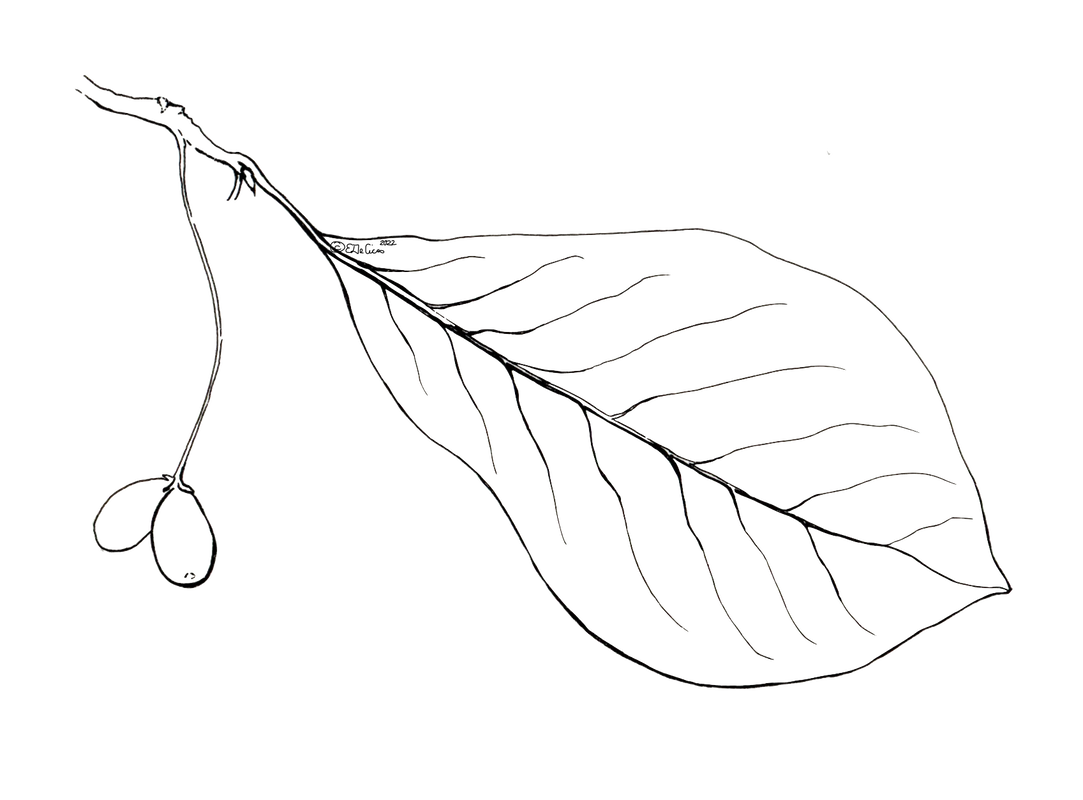
The leaves are simple and oval shaped, turning deep shades of red and orange in autumn. The blue-black fruits ripen as the leaves start to change. The twigs branch off perpendicular to the stem, creating a distinct pattern easy to recognize in winter.

Blackgum (Nyssa sylvatica) and Swamp tupelo (Nyssa biflora) both occur in NJ. They are easily confused, but Swamp tupelo has flowers and fruits in pairs.
iNaturalist observation:
www.inaturalist.org/observations/111856624

​Lat: 39.479628
Lon: -74.529252
Accuracy: 17m
Geoprivacy: Open

Powered by Create your own unique website with customizable templates.