Lichen
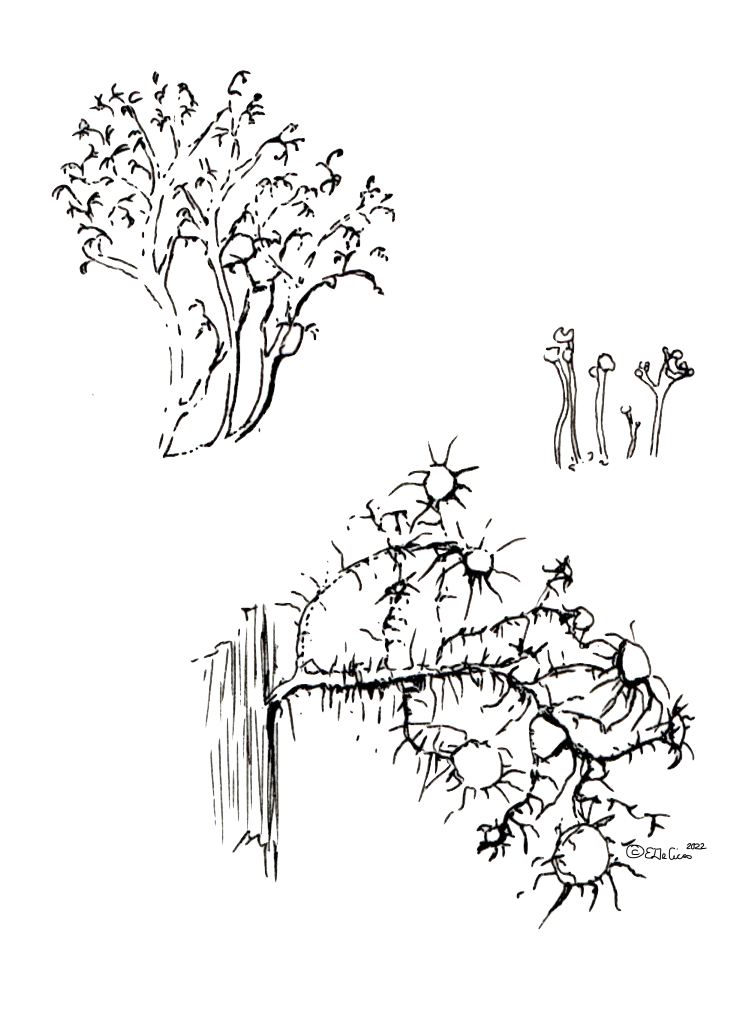
Clockwise from top: Reindeer lichen (Cladonia sp.) , British Soldier lichen (Cladonia macilenta), Old man's beard lichen (Usnea strigosa)
|
Lichen
Lichens are a symbiotic relationship between a fungus and an algal partner. Lichens are named after the fungal component. The fungus provides structure (the "home") and the alga provides food. There are many species, but some of the most common ones you may encounter are green shield lichen and members of the Cladonia (reindeer lichen) family. Lichens collect water from the atmosphere and help clean our air. Some are very intolerant of pollution. It is always a good sign when you see a lot of lichens--that means the air is healthy and the land hasn't seen much disturbance. Lichens grow very slowly, usually only a few millimeters per year. A reindeer lichen the size of your fist could be 40 years old. Colors vary from bright to dull greens, grey, yellow-green, blue-green, and orange. Fruiticose tend to grow in damper habitats where they can collect more moisture. Crustose tend to grow on bark, soil, and rocks and only have one side with the alga exposed. Learn more about lichens from the New Jersey Mycological Association: www.njmyco.org/lichens.html |
iNaturalist observation
www.inaturalist.org/observations/108948342
Lat: 39.497346
Lon: -74.523455
Accuracy: 126m
Geoprivacy: Open
or
https://www.inaturalist.org/observations/111860947
Lat: 39.478445
Lon: -74.530076
Accuracy: 18m
Geoprivacy: Open
www.inaturalist.org/observations/108948342
Lat: 39.497346
Lon: -74.523455
Accuracy: 126m
Geoprivacy: Open
or
https://www.inaturalist.org/observations/111860947
Lat: 39.478445
Lon: -74.530076
Accuracy: 18m
Geoprivacy: Open
